
our research
Unlocking the next generation of functional soft matter
Many of society’s grand challenges, from energy and sustainability to human-machine integration, are polymer science problems. We look beyond today’s materials to ask: what properties are still out of reach, what physics could unlock them, and what chemistry will make them real?
Then we make those molecules.

current themes in our work
How we’re engineering polymers for real-world applications

Mechanistic understanding
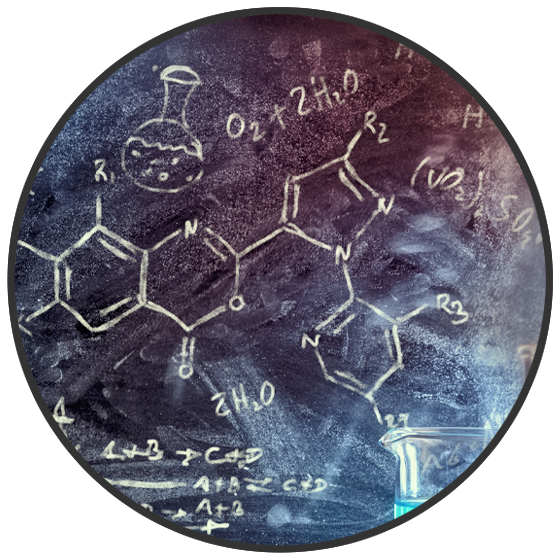
We combine materials design with cutting-edge characterization techniques, including broadband dielectric spectroscopy and rheology, to understand how molecular structure impacts dielectric and mechanical relaxation processes. Through these techniques, we learn how our polymers move, relax, polarize, and transport ions through time and space. This connects molecular structure to macroscopic properties and teaches us how to build polymers that solve big problems.
Fast and scalable sequence control
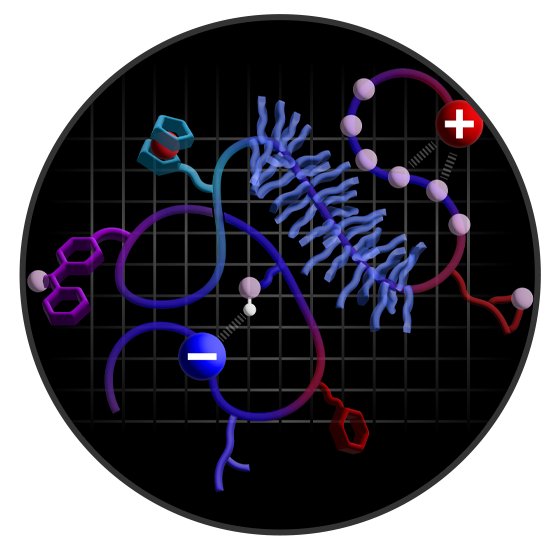
Natural polymers, including proteins and poly(nucleic acid)s offer capabilities that are impossible in synthetic polymers. For example, proteins can efficiently sort ions beyond the ability of any synthetic membrane, while our DNA stores orders of magnitude more data than the most sophisticated microchip.
The secret? Precise control of monomer sequence. Yet, despite decades of effort, existing routes to sequence-defined polymers are generally too slow to be useful. We develop new, high-throughput routes to sequence-defined polymers to propel new discoveries in molecular machines and data storage.

Programmable crystallinity
Many commodity polymers display undesirable crystallinity that impacts their long-term optical, mechanical, or electrical performance. This is often solved with small-molecule additives, which produce environmental hazards including endocrine disruption. We design cheap and scalable alternatives with tunable crystallinity by engineering both the kinetics and thermodynamics of crystallization, paving the way to safer materials in our day-to-day environments and easier end-of-life recovery of the starting monomers.
Net-neutral polyelectrolyte melts
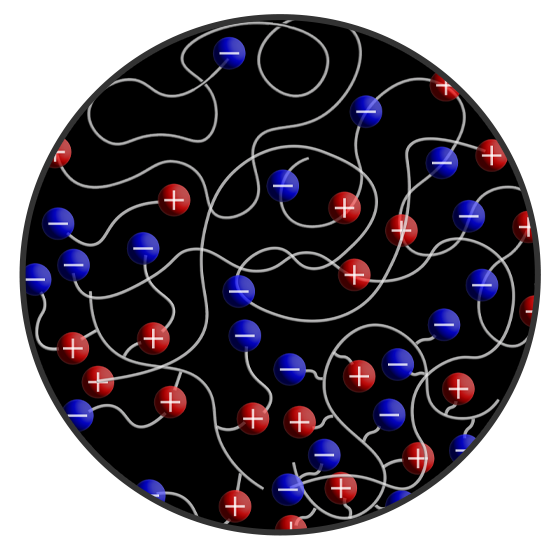
What happens when a polymer contains charged groups, yet is net-neutral? We have found that such materials offer superlative dielectric properties with far-reaching implications across energy, robotics, and medicine. We are interested in i) the physics governing the thermal, mechanical and electrical properties of these materials, and ii) how we can use chemistry to tune their architecture and reveal unprecedented and useful properties.
our research approach
We combine synthetic chemistry + polymer physics to rethink how polymers are designed, deployed, and destroyed
Our lab develops new synthetic pathways and polymer architectures and rigorously quantifies their physics to tackle a broad array of challenges. This interdisciplinary approach creates a pipeline of high-performing, scalable materials that are ready for a circular economy.
featured projects
A different kind of dipole
We are developing a library of net-neutral polyelectrolyte melts with extraordinary dielectric constants, which we expect to open new horizons in soft robotics, human-machine interfaces, and batteries.
Programmable phase behavior from off-the-shelf building blocks
We design polymers with on-demand control of crystallinity to eliminate small molecule plasticizers, facilitate low-temperature processing, and enable end-of-life recovery of starting monomers.
Faster sequence control
Sequence-controlled polymers are limited by the speed and scale of available synthesis pathways. We are developing new solution-state sequence-control strategies to improve throughput and build protein-like molecular machines.
Join our team
We’re building a team of curious, collaborative researchers who want to shape the future of polymer science. If you’re a potential graduate student, postdoc, or collaborator interested in making, understanding, or implementing groundbreaking soft materials, we would love to hear from you.
Open positions will be posted soon. In the meantime, feel free to reach out with your CV and a brief statement of interest.